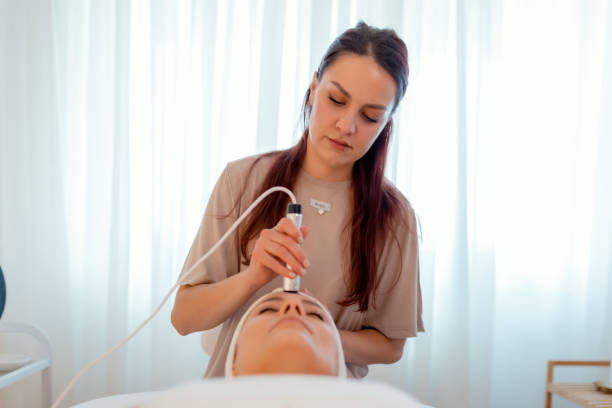
In an industry where skincare trends change rapidly, some technologies remain consistently relevant. High frequency therapy is one such example. Used in professional facial treatments for decades, it continues to be taught in accredited beauty courses and applied in clinics, salons, and advanced home-care routines.
Its longevity is not accidental. High frequency technology addresses fundamental skin functions rather than surface-level concerns.
Page Contents
The Science Behind High Frequency Facial Treatments
High frequency treatments use low-level electrical currents delivered through glass electrodes filled with either argon or neon gas. When the electrode comes into contact with the skin, it produces a mild oxygenating effect and gentle thermal stimulation.
This process supports:
- Increased blood circulation
- Reduced surface bacteria
- Improved tissue oxygenation
These effects are particularly valuable during professional facials, where skin may be congested, inflamed, or recovering from extractions.
Why Certification Matters in High Frequency Devices
One of the most overlooked aspects of high frequency equipment is compliance. In the UK and EU, devices used for professional treatments must meet recognised safety standards. Proper CE and RoHS certification confirms that a machine has been tested for electrical safety, material compliance, and operational reliability.
This is especially important for practitioners, as non-compliant devices are not accepted by insurance providers. Certification is not a marketing label; it is a legal and professional requirement that determines whether a device can be used in client-facing treatments.
Where High Frequency Fits Into Professional Facial Protocols
High frequency is rarely used as a standalone solution. Instead, it is integrated into structured facial treatments to support skin recovery and balance. Common applications include:
- Post-extraction calming
- Acne-focused facials
- Anti-ageing protocols to support circulation
- Scalp treatments to improve follicle oxygenation
Because the treatment is non-invasive, it allows practitioners to enhance results without adding downtime or discomfort.
Argon and Neon: Purpose-Driven Treatment Selection
Different electrodes are selected based on treatment goals. Argon gas, producing a blue or violet glow, is typically used for acne-prone or congested skin due to its antibacterial properties. Neon gas, emitting a red or orange light, is often used in treatments focused on ageing, dullness, or lack of circulation.
Understanding these distinctions is part of professional training and ensures treatments are applied intentionally rather than generically.
The Continued Role of High Frequency in Modern Skincare
Despite advances in LED therapy, microcurrent, and injectable treatments, high frequency technology remains relevant because it complements other modalities rather than competing with them. Its ability to support skin hygiene, circulation, and recovery makes it a reliable component in both traditional and modern facial protocols.
For those interested in how this technology is applied in certified equipment designed for structured treatments, this high frequency machine overview provides context on professional-grade implementation.
A Technology Built on Consistency, Not Trends
High frequency therapy is not defined by dramatic instant results. Its value lies in controlled application, correct technique, and long-term skin maintenance. That is why it continues to appear in accredited training manuals, insurance-approved treatment lists, and professional facial routines worldwide.
In a results-driven industry, high frequency technology stands out by doing something deceptively simple: supporting the skin’s natural ability to restore balance.